
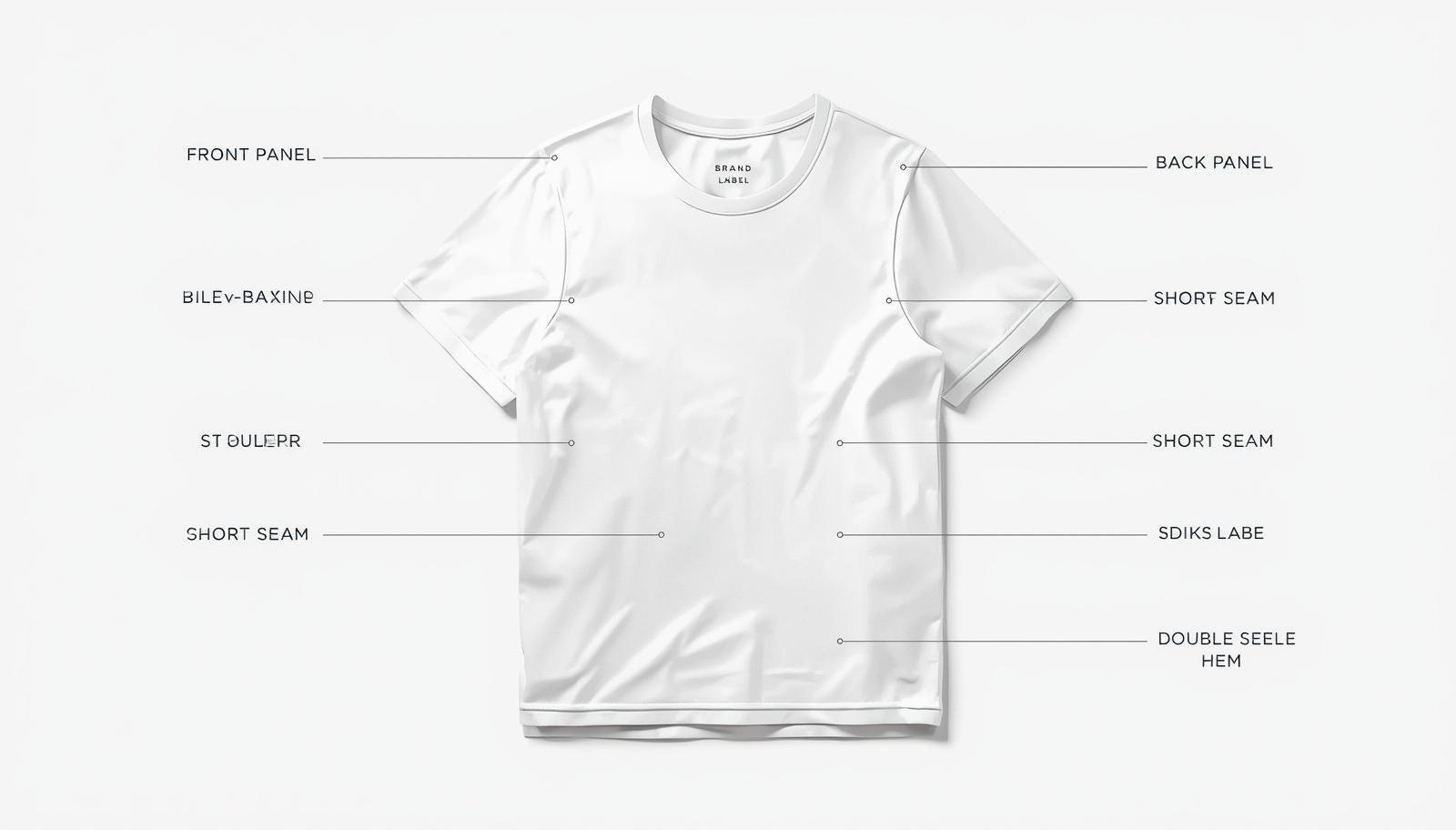
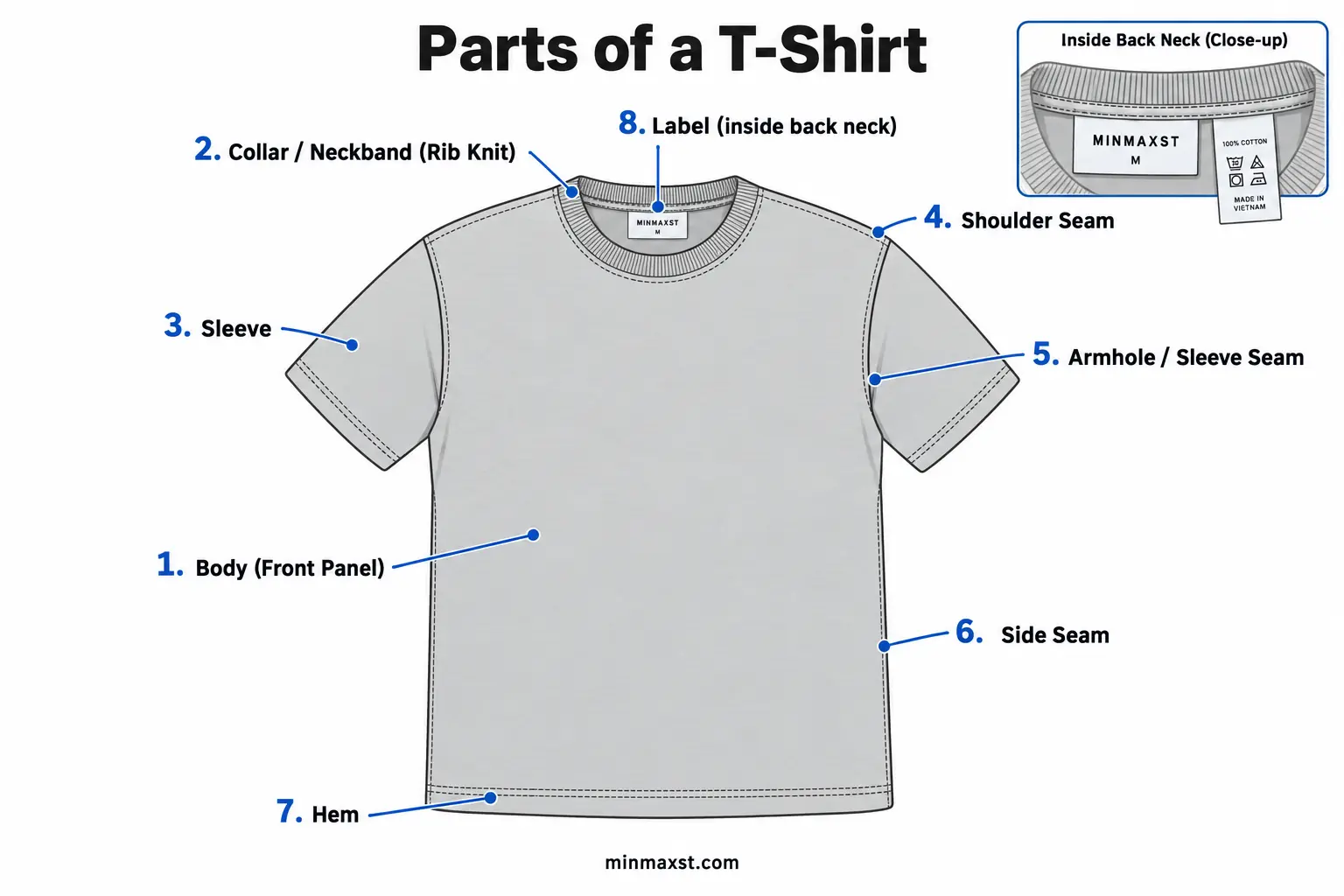
A t-shirt is made up of several distinct parts — including the body (front and back panels), collar, sleeves, hem, shoulder seams, side seams, sleeve seams, and labels. Each part plays a specific role in fit, comfort, durability, and style. Understanding these components helps buyers, designers, and brands in the USA make smarter decisions when sourcing or customizing apparel.
Why Knowing T-Shirt Anatomy Actually Matters
You probably put on a t-shirt every single day without thinking twice about it. Most people do. But if you are a brand owner trying to place a bulk order, a designer sketching your first collection, a print-on-demand seller in Chicago, or simply someone who wants to buy the right shirt that actually fits well, knowing the parts of a t-shirt is more useful than you might think.
The global t-shirt market was valued at over $45 billion in 2023 and continues to grow rapidly, with the United States remaining one of the largest consumer and production markets in the world. Yet most buyers — even experienced ones — struggle to communicate exactly what they want when ordering from manufacturers. They say things like ‘make the neck less tight’ or ‘the sleeves feel weird’ without knowing the proper terms.
That is where this guide comes in. At Minmax Textile, we work with brands, retailers, and designers across the USA, UK, Canada, France, and Germany every day. We have seen firsthand how understanding basic garment construction improves conversations with manufacturers — and ultimately, the quality of the final product.
Let us break down every part of a t-shirt clearly, practically, and without unnecessary jargon.
The Main Parts of a T-Shirt: A Complete Breakdown
A standard t-shirt may look simple, but it is actually an assembly of carefully constructed components. Each part has a name, a function, and design variations that affect the garment’s final look, feel, and longevity.
1. The Body (Front and Back Panels)
The body is the largest section of the t-shirt and consists of two main panels: the front and back panels. These are cut from the main fabric and sewn together along the side seams.
Front panel: This is the face of the shirt — what you see when the garment is laid flat. It is where most graphic prints, logos, and embroidery are placed. Brands in the USA frequently customize the front panel for branding purposes.
Back panel: Largely unnoticed but structurally essential. The back panel often features brand labels or care instructions printed directly on the fabric (a process called ‘tear-away’ or ‘direct print’ labeling).
The length of the body — from the shoulder seam to the hem — determines whether a shirt reads as a crop top, a standard tee, or a longline shirt. This measurement is critical when ordering custom apparel for specific fits.
2. The Collar (Neckline)
The collar is perhaps the most defining visual feature of a t-shirt. The type of collar dramatically changes how a shirt looks and who it appeals to. Here are the most common collar styles you will encounter:
- Crew neck: The most classic and widely used collar style. A round neckline that sits close to the base of the neck. Used in everything from basic Hanes tees to premium streetwear brands in New York and Los Angeles.
- V-neck: A downward-pointed neckline that creates a more open, elongated look. Popular in casual and semi-formal settings across the USA.
- Scoop neck: A wider, deeper curved neckline. More common in women’s t-shirts and relaxed-fit styles.
- Henley neck: Features a placket with two to three buttons below a crew neck. Popular in workwear and heritage fashion.
- Polo collar: A folded collar with a placket and buttons. Technically a category of its own, but often called a polo t-shirt.
Collar construction matters too. Most t-shirt collars are reinforced with a separate ribbed band of fabric sewn around the neckline opening. This band — called the rib collar or neckband — is usually made from a 1×1 or 2×1 rib knit, which gives it the elasticity to stretch over your head and then return to shape.
3. Sleeves
Sleeves are cut separately and then attached to the body of the shirt along the armhole (also called the armscye). T-shirts typically feature one of three sleeve styles:
- Short sleeves: Standard on most everyday t-shirts. Length varies — some hit mid-bicep, while others extend to the elbow.
- Long sleeves: Common in fall and winter options. Full arm coverage with or without cuffs.
- Cap sleeves: Very short sleeves that cover the shoulder. Often found in women’s fitted styles.
- Sleeveless (muscle tee): No sleeve at all. The armhole is finished with a binding or a simple fold-and-stitch hem.
The width of the sleeve at the opening — called the sleeve hem or cuff hem — also varies by style. Fitted athletic shirts may taper significantly toward the hem, while oversized streetwear tees keep a consistent, wide opening throughout.
4. Shoulder Seams
The shoulder seam runs across the top of each shoulder, connecting the front and back panels. It is a subtle part, but it is one of the biggest indicators of how well a shirt fits.
When the shoulder seam sits exactly at the edge of the shoulder bone, the shirt is said to have a proper shoulder fit. If it droops past the shoulder or rides up toward the neck, the shirt is either too large or too small. For custom brands in the USA, ensuring correct shoulder seam placement across size runs is critical for maintaining a professional look.
Some premium t-shirts and athletic tops use a construction technique called raglan or saddle shoulder, which eliminates the traditional shoulder seam. Instead, the sleeve runs as a single continuous diagonal from the collar to the underarm. This creates a greater range of motion, making it popular in sports and outdoor apparel.
5. Side Seams
Side seams run vertically along both sides of the shirt, connecting the front and back panels from the underarm down to the hem. They are one of the most important structural elements of a well-constructed t-shirt.
Taped side seams vs. tubular construction:
- Taped (cut and sewn) side seams: Constructed by cutting the front and back panels separately and sewing them together. This allows for a more tailored, shaped fit. Most mid-range and premium tees use this construction.
- Tubular construction: The fabric is knit in a circular tube, eliminating the need for side seams. Common in budget t-shirts and promotional tees. The downside is that the fabric can twist around the body over time after washing.
6. Sleeve Seams (Armhole Seam)
The sleeve seam — sometimes called the armhole seam or set-in sleeve seam — is where the sleeve is attached to the body of the shirt. A clean, well-aligned sleeve seam indicates quality construction.
Poor sleeve seam construction is one of the most common complaints in low-quality garments. You will notice it when the sleeve twists forward or the underarm bunches up uncomfortably. At Minmax Textile, our quality control checks always include sleeve seam alignment as a primary inspection point.
7. The Hem
The hem is the finished bottom edge of the t-shirt. It is folded over once or twice and stitched down to prevent unraveling and provide a clean finish. There are several hem styles used in t-shirt construction:
- Single-needle hem: A single row of straight stitching. Creates a cleaner, flatter look. Common in premium and fashion tees.
- Double-needle hem: Two parallel rows of stitching visible on the outside. This is the most common construction on standard t-shirts. Stronger and more durable than a single-needle hem.
- Curved hem: The hem dips lower at the front and back and rises on the sides. Popular in longline and streetwear styles.
- Raw hem: Unfinished and intentionally left to fray. Found in distressed or deconstructed fashion tees.
Hem length and shape can completely transform a shirt’s vibe. A straight hem reads as clean and classic. A curved hem feels more relaxed. A high-low hem (shorter in front, longer in back) adds a modern, fashion-forward edge.
8. Labels and Tags
Labels are attached to the inside of the t-shirt and carry important information. Most t-shirts have at least two types of labels:
- Brand label (main label): Usually sewn at the center back of the collar, it displays the brand name or logo. This is prime real estate for brand identity.
- Care label (wash instruction label): Required by US Federal Trade Commission (FTC) regulations, care labels must include fabric content and washing instructions. These are typically sewn on the inside left seam or printed directly on the inside back.
- Size label: Often attached alongside the care label or as a separate tab.
Many modern brands in the USA have moved to printed or heat-transferred labels (sometimes called ‘tagless’ labels) to improve comfort and eliminate the scratchy sensation of woven tags against the skin.
How Fabric Choice Affects Each Part of the T-Shirt
Understanding the parts of a t-shirt also means understanding how fabric interacts with each component. Different fabrics behave differently at the collar, hem, and side seams.
100% cotton: Breathable and comfortable, but it can lose shape at the collar over time. Ring-spun cotton holds its shape better than open-end-spun cotton.
Cotton-polyester blends (50/50 or 60/40): More resistant to shrinkage and wrinkling. Collars and hems hold their shape better. Popular for printed promotional tees in the USA.
Tri-blends (cotton, polyester, rayon): Extremely soft and lightweight with a slightly heathered look. The collar and body drape beautifully but require more delicate washing.
Performance fabrics (moisture-wicking polyester): Designed for athletic use. Sleeve and armhole seams are often flatlock stitched to reduce chafing during movement.
T-Shirt Parts in the Context of US Fashion and Manufacturing
The United States has a rich history of t-shirt manufacturing — from the classic American Apparel made-in-USA tees to the growing domestic production movement in states like North Carolina, California, and Texas. Understanding garment terminology helps American buyers communicate more effectively with both domestic and overseas suppliers.
For instance, many small brands based in cities like Austin, Portland, and Brooklyn specifically request ‘side-seamed, single-needle hemmed, ringspun cotton’ tees when they talk to manufacturers. These are not just industry buzzwords — they represent meaningful construction choices that affect how the shirt looks, fits, and lasts.
When working with a trusted manufacturer like Minmax Textile, clients across the USA, UK, and Canada often request detailed tech packs (technical specification sheets) that label every garment part with measurements and construction notes. Knowing your t-shirt anatomy helps you fill out those tech packs accurately and avoid costly sampling rounds.
Practical Tips When Ordering Custom T-Shirts
Whether you are a small business owner in Atlanta or a fashion designer in London, these tips will help you leverage your knowledge of t-shirt parts when placing your next order:
- Always specify collar style and collar rib weight — a heavier rib creates a more structured collar.
- Request the shoulder seam position in your tech pack to ensure proper sizing across all SKUs.
- If you are doing large prints, make sure to specify chest placement in centimeters from the collar seam down.
- Ask about hem construction (single vs double needle) based on your price point and durability requirements.
- For premium retail, request printed neck labels (tagless) to reduce returns related to tag irritation.
- Confirm side seam construction (cut-and-sewn vs tubular) before production — tubular is cheaper but can twist after washing.
- When ordering from overseas manufacturers, including Minmax Textile, request a pre-production sample to verify sleeve alignment and collar finish before bulk production.
Quick Reference: T-Shirt Parts and Their Functions
Part Primary Function Key Variations
Body (Front/Back Panels) Main fabric structure and surface area Standard, cropped, longline
Collar / Neckband Neckline finish and style: Crew, V-neck, scoop, Henley
Sleeves, arm coverage, shorts, long, cap, sleeveless
Shoulder Seams Connect panels at the shoulder Set-in, raglan, saddle
Side Seams Structural support, shape Cut-and-sewn, tubular
Sleeve Seams: Attach sleeve to body. Single, double needle, flatlock
Hem Bottom edge finish Single-needle, double-needle, curved, raw
Labels / Tags Branding and compliance Woven, printed, tagless
FAQ: Parts of a T-Shirt — Common Questions Answered
Q1: What are the basic parts of a t-shirt?
A t-shirt consists of eight main parts: the front and back body panels, the collar (neckband), the sleeves, the shoulder seams, the side seams, the sleeve seams, the hem, and labels or tags. Together, these components define the garment’s fit, durability, and visual identity.
Q2: What is the collar band on a t-shirt?
The collar band — also called the neckband or rib collar — is a separate strip of ribbed knit fabric sewn around the neckline of the shirt. It provides elasticity so the shirt can be pulled over the head and then return to its original shape. The weight and style of the rib affect how structured the collar looks.
Q3: What is the difference between a side-seamed and tubular t-shirt?
A side-seamed t-shirt is cut from separate front and back panels and sewn together along each side. This creates a more tailored, shaped fit. A tubular t-shirt is knit in a circular tube with no side seams, which reduces cost but can cause the shirt to twist to the side after repeated washings.
Q4: What does ‘single-needle’ vs ‘double-needle’ hem mean?
A single-needle hem uses a single row of straight stitching along the bottom edge of the shirt, creating a flatter, cleaner look preferred in fashion and premium retail. A double-needle hem uses two parallel rows of stitching, which is stronger and more common in standard everyday t-shirts. You can see both rows clearly on the outside of the garment.
Q5: Why do t-shirt labels matter for US buyers?
In the United States, the Federal Trade Commission (FTC) requires all garments to carry a care label that includes fiber content, country of origin, and washing instructions. Beyond compliance, labels are also a key branding element. Many US brands invest in custom woven labels or printed tagless solutions to create a premium unboxing and wearing experience.
Why Minmax Textile Is the Right Partner for Custom T-Shirt Production
At Minmax Textile, we have spent years helping brands, retailers, and designers across the USA, UK, Canada, France, and Germany create t-shirts that perform as well as they look. We understand that every part of a t-shirt — from the collar rib to the hem stitch — is a decision that affects your customer’s experience.
Our team guides clients through every step of the customization process. Whether you are finalizing a tech pack, choosing between collar styles, or debating hem construction for a new capsule collection, we bring manufacturing expertise to the conversation so you do not have to figure it out alone.
We serve both small brands placing their first order and established labels managing complex multi-SKU production runs. Our clients in cities from New York and Los Angeles to London and Toronto trust us because we treat every detail as seriously as they do.
Pro Tip from Minmax Textile: When placing your first custom t-shirt order, always request a size chart that includes measurements for each part of the shirt — chest width, body length, sleeve length, and collar opening. This prevents surprises at the sample stage and keeps your production timeline on track.
Conclusion: Knowledge of T-Shirt Parts Gives You a Competitive Edge
Understanding the parts of a t-shirt is not just academic knowledge — it is practical information that helps you buy smarter, design better, and communicate more clearly with manufacturers. From the collar to the hem, from the side seams to the sleeve attachment, every component of a t-shirt is a choice that reflects your brand values.
Whether you are launching a new apparel brand in the USA, sourcing wholesale tees for your retail store in the UK, or designing a custom uniform for your company in Canada, this knowledge gives you confidence at every stage of the process.
Minmax Textile is here to help you put that knowledge to work. Reach out to our team for a consultation, and let us build something excellent together — one well-constructed seam at a time.


