
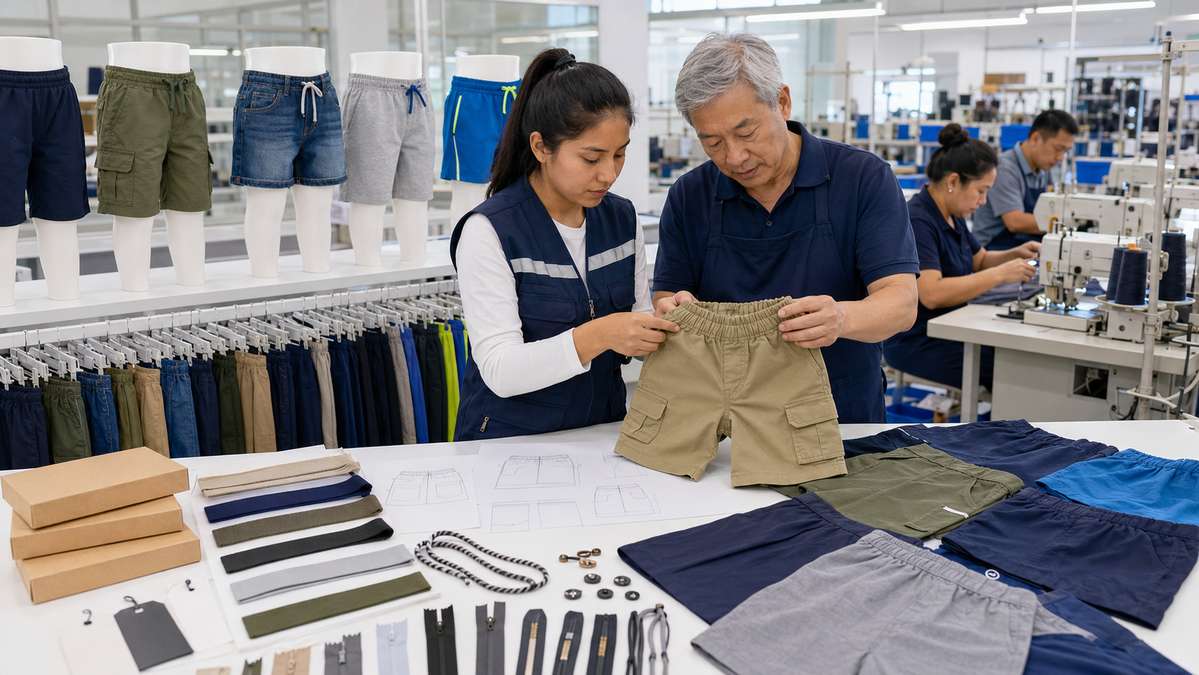
A kids’ shorts pants manufacturer develops and produces casual shorts, school shorts, cargo styles, denim shorts, and pull-on bottoms for brands and wholesalers. The best supplier should manage fabric, fit, waist comfort, trim safety, private labels, and bulk quality. Buyers should approve a tested sample and written specifications before production.
Shorts earn their place through everyday use
Children wear shorts to school, on holiday, during play and at home. That creates a tough design brief. The garment should feel light, but it cannot be weak. It needs freedom to move, yet the waistband must stay in place. Pockets should be useful without adding too much bulk.
When any of these details fail, a basic product becomes a source of returns. A tight rise limits movement. Thin pocket bags tear. Rough labels irritate the skin. Weak elastic loses shape. Dark colors may also rub or fade if the fabric is not tested well.
This is why choosing a kids’ shorts pants manufacturer should involve more than a price request. A good partner helps turn the target customer, climate, fit, and sales plan into a product that can be replicated to the same standard.
Minmax Textile offers a varied range of kids’ shorts and pants. It includes cotton, twill, denim, cargo, casual and school-uniform styles. The page also highlights elastic waists, adjustable fits, reinforced seams, private labels and bulk supply. This article shows buyers how to assess those options practically.
Plan the assortment before requesting samples
A clear range plan saves time and prevents several styles from competing for the same customer. Start by giving each short a job.
The everyday short
This style should be easy to wear and wash. Cotton twill, jersey or a simple blend may work, depending on the target price and look.
The school short
School shorts need a neat shape, repeat colors and strong seams. Grey, navy, black or khaki may be useful, but each buyer should follow its own uniform program.
The fashion short
Fashion styles may use garment washes, prints, shaped pockets, special trims, or a new fit. Extra details can raise sample time and cost.
The active play short
Movement, breathability, and quick-drying may matter most. Test the fabric and waistband during running, bending, and sitting.
The cargo short
Cargo pockets add function and a clear visual style. They also add fabric, trims, and sewing steps, so pocket position and flap security need close review.
Brands planning a full children’s collection can compare the broader services offered by a custom clothing manufacturer before deciding whether to source each category from a different supplier.
Match the fabric to the selling climate
There is no single best material for kids’ shorts. The right choice depends on weather, use, care needs, fit and price.
| Fabric | Useful for | What buyers should check |
|---|---|---|
| Cotton poplin | Light summer and casual shorts | Opacity, seam strength and creasing |
| Cotton twill | Chinos, uniforms and cargo shorts | Weight, shrinkage and colorfastness |
| Cotton-stretch twill | Slim or close-fitting styles | Stretch recovery and baggy knees |
| Jersey | Soft pull-on and lounge shorts | Shape, pilling and edge curling |
| French terry | Casual or sporty ranges | Loop quality, weight and shrinkage |
| Denim | Fashion and durable casual shorts | Wash effect, rubbing and hard trims |
| Polyester blend | Active and easy-care styles | Skin feel, heat comfort and breathability |
Ask for exact fiber content and fabric weight. “Cotton shorts” is not enough for a production order. Lightweight cotton may suit hot weather, while a firmer twill may create a cleaner, more uniform look.
Wash the fabric and first sample with the planned care method. Check color, shrinkage, twisting, and surface feel. Do this before approving bulk material.
Fit starts at the waist and ends at the hem
Parents may notice color first, but children notice comfort. The main fit points are the waist, hip, rise, thigh, inseam, and leg opening.
Elastic waist
A full elastic waist works well for pull-on styles and younger children. The elastic should stretch smoothly and return to shape. It must not twist inside the casing.
Adjustable waist
An internal adjuster can support growth and a wider range of body shapes. Check the button, elastic, internal finish and comfort when tightened.
Fixed waist with a fly
Older children may prefer a button, hook or snap with a zipper fly. Each part must suit the age group and meet the buyer’s safety plan.
Drawcord waist
Drawcords can create an active or casual look. Children’s garment rules vary by market and age, so the buyer must confirm whether a cord is allowed and how it should be built.
Minmax Textile’s company profile describes sample development, garment technical support, and quality teams. Those services can help, but the buyer should still approve the waist and fit on the intended age group.
Length changes both style and movement
Short length is not only a fashion choice. It affects coverage, heat comfort, mobility, and the way the garment sits when a child moves.
Common options include:
- short casual styles;
- mid-thigh shorts;
- knee-length school or Bermuda shorts;
- cargo shorts with a longer leg; and
- cycling or fitted stretch shorts.
State the inseam and outseam for each size. Do not rely on labels such as “short” or “long.” Also define the front and back rise. A short rise may pull when the child sits, while too much rise can look loose and feel bulky.
Test the sample during normal movement. Ask the fit model to sit, squat, walk, and climb a step. Then check whether the hem rides up, the waist rolls, or the pockets open.
Use one clear measurement method
Size labels alone do not control fit. The technical file should show how each point is measured on a flat garment.
Key points include:
- waist relaxed and extended;
- hip width;
- front and back rise;
- thigh width;
- inseam;
- outseam including waistband;
- leg opening;
- waistband height;
- pocket position and opening; and
- drawcord or adjuster length where used.
Check the smallest, middle and largest sizes in the range. Children’s body shapes change as they grow, so a one-size-fits-all rule may not suit toddlers through teens.
Buyers creating several age-led products can use the broader kids’ clothing category to plan a common size system across shorts, pants, polos and sweaters. Each garment still needs its own fit test.
The 12-point sample scorecard
A sample review is more useful when every team checks the same points. Use a simple scorecard and record each comment in one file.
- Fabric: Does the weight, stretch, and hand feel match the brief?
- Color: Does it match the approved standard in normal light?
- Waist: Is it comfortable, secure, and easy to use?
- Rise: Can the child sit and bend without strain?
- Leg shape: Does the fit match the drawing and size chart?
- Length: Does it give the planned look and coverage?
- Pockets: Are they placed well, secure, and deep enough?
- Seams: Are stress points reinforced and smooth inside?
- Trims: Are buttons, snaps, zippers, and cords suitable?
- Branding: Are labels and decoration correct and comfortable?
- Wash result: Does the garment keep its size, color, and shape?
- Packing: Are folding, labels, barcodes, and bags correct?
Mark each point as approved, revise, or reject. Include photos and exact measurements. Avoid comments such as “make better” or “fit is wrong.” Clear comments make the next sample faster and more accurate.
Construction details that protect the product
Shorts face stress at the seat, crotch, pockets, and waistband. These areas need planned construction, not last-minute repairs.
Seat and crotch seams
Use suitable seam strength and allowance for the fabric and fit. Close styles with stretch need special care because movement puts more force on the seam.
Pocket corners
Bar tacks or another approved method can support pocket openings. Pocket bags should resist tearing and stay inside the garment.
Belt loops
Belt loops must be straight and secure. Their size should match the intended belt and waistband.
Hems
Hems should lie flat without twisting. On printed or washed styles, check that the finish stays even around the leg.
For buyers who want longer bottoms in the same fabric story, Minmax Textile also offers manufacturing of kids’ twill pants. Sharing a base fabric may help color control, but shorts and trousers need separate patterns and samples.
Private label shorts should feel like one brand
Private-label kids’ shorts can be customized in fabric, fit, color, wash, trims, print, and packaging. A full brand package may include:
- a main woven or printed label;
- size and care labels;
- a logo print, patch, or embroidery;
- custom buttons, snaps or zipper pullers;
- branded elastic or drawcords;
- hangtags and barcode labels;
- retail bags, paper bands or boxes; and
- custom carton marks.
Choose branding that fits the garment. Dense embroidery may pull on light fabric. A thick patch can feel hard. Metal trims can add weight and testing needs. Review a decorated sample before bulk work starts.
An OEM kids’ shorts manufacturer follows the buyer’s design and tech pack. An ODM partner may help create or adapt a style. Make the expected service clear when asking for a quote.
Safety and testing should be written into the order
Children’s clothing rules change by destination and age. Buyers should confirm current duties with their importer, lab or compliance adviser. Do not rely on a broad promise of “export quality.”
A test plan may cover:
- fiber-content accuracy;
- restricted substances;
- colorfastness to wash, sweat and rubbing;
- shrinkage and twisting;
- seam strength and slippage;
- elastic recovery;
- button, snap and trim attachment;
- sharp points or rough edges;
- small-parts risks; and
- drawcord or cord rules.
The tested sample should use the same fabric, dye, print and trims planned for bulk goods. Any material change should be reported and approved.
Buyers developing boys-led ranges may compare the related boys’ short pants category. The same safety rule applies: requirements must match the product, age group and destination.
Quality control in four useful stages
Final inspection is important, but it cannot repair a full order. Check quality throughout production.
Stage 1: fabric and trims
Inspect fabric width, weight, shade and surface faults. Test shrinkage before cutting. Check elastic, zippers, buttons and labels against the approved items.
Stage 2: cutting and first sewing
Confirm pattern direction, size marks, pocket placement and key measurements. Review early garments before most units are sewn.
Stage 3: in-line checks
Watch seam shape, waist construction, reinforcement and measurement trends. Correct the cause of a fault, not only the faulty piece.
Stage 4: final random inspection
Check quantity, appearance, measurements, labels, packing and carton marks. The acceptance method and defect limits should be agreed before production.
Minmax Textile states that its wider process includes internal checks, third-party testing and pre-final inspection at AQL 2.5. Buyers should confirm the exact inspection plan for their shorts order in the purchase agreement.
Local market planning without forced localization
Each market needs a real product decision. Simply repeating country names does not make an article or product locally useful.
| Market | Practical consideration |
|---|---|
| USA | Casual, school, and camp styles may need different price points. Confirm the children’s testing, tracking, and labeling duties with the importer. |
| Australia | Plan launches for Southern Hemisphere seasons. Light cotton, active and school shorts may suit different regions and channels. |
| UK | School shorts need stable grey, navy or black shades, neat fits and repeat supply. Easy care and adjustable waists can add value. |
| UAE | Light, breathable shorts can suit heat and indoor play. School and modest lengths should follow the buyer’s exact brief. |
| Germany | Clear product files, strong construction, and material details support buyer review. Confirm current EU safety, chemical, and label rules. |
| Canada | Summer is shorter in many regions, so timing matters. Confirm federal and provincial label needs, including language rules. |
| Saudi Arabia | Lightweight casual and school styles may fit warm conditions. Ask the importer about Arabic labels and required documents. |
| Netherlands | Easy movement, simple care, and durable fabric make it suitable for active daily use. Mid-thigh and longer casual fits may have broad value. |
| South Africa | Weather and buying power vary by region. Consider more than one fabric weight or price tier. Schoolwear can support repeat demand. |
| Qatar | Breathable shorts can work for leisure, sports and indoor settings. Confirm length, label and import needs before sampling. |
These points are planning guidance, not legal advice. Local buyers should approve the size chart, fabric, length, labels and test plan.
Work backward from the selling date
Shorts are seasonal in many markets. A late order may lose value even when the product is good.
Build time for:
- design and tech-pack review;
- fabric and trim sourcing;
- sample development;
- fit comments and revisions;
- lab testing;
- bulk production;
- final inspection; and
- freight and customs clearance.
Set one target date for goods to reach the warehouse, not only the factory ship date. Add time for unexpected changes to samples or tests.
Brands can pair shorts with custom kids’ polo shirts for school, resort, or casual sets. Coordinated colors can strengthen the range, but each category needs its own production plan.
MOQ and pricing: ask for the full picture
The unit price changes with fabric, wash, print, pocket count, trims, size range, testing, packing, and quantity. A cargo short will often need more work than a plain pull-on short.
Send these details for an accurate quote:
- quantity by style and color;
- size range and ratio;
- fabric content and weight;
- fit and construction details;
- branding and packing;
- test needs;
- destination and shipping term; and
- required delivery date.
Minmax Textile’s shorts page promotes bulk-order support without giving a fixed category MOQ. Its company profile publishes a general benchmark of 2,000 pieces per color and style. The site also gives lead-time examples for imported fabric. Treat these as general information. The written quote should confirm the final MOQ, sample fees, price, and schedule for the exact order.
How to check a manufacturer before paying
Start with the supplier’s legal identity, address, product experience, and ability to answer technical questions. Ask for current audits or certificates when your business needs them. Check the issuer, date, and scope.
Then review product evidence. A strong sample, a clear test report, and a realistic production plan are more useful than a long list of claims. Reviews may reveal how the team communicates and handles problems. A maintained Google Business Profile and relevant local directory pages can also help confirm identity and contact details.
For a large order, consider a factory visit, a video review, or an independent audit. Agree on payment, quality, late-delivery and claim terms in writing.
Frequently asked questions
What types of kids’ shorts can a manufacturer make?
Common products include cotton shorts, twill chinos, denim shorts, cargo shorts, school shorts, jersey pull-ons and active styles. The factory’s fabric access, machines and pattern skills will shape its range.
Which fabric is best for children’s shorts?
Cotton can feel light and natural. Twill can add structure and wear strength. Jersey can suit soft pull-on styles, while stretch blends can improve movement. The best choice depends on climate, use, fit, care, and price.
Can I order private label kids’ shorts?
Yes. Buyers can request custom fabric, colors, sizes, labels, prints, embroidery, trims, hangtags, and packing. Approve a sample with the final branding before bulk production.
What is the MOQ for custom kids’ shorts?
MOQ varies by fabric, color, trim, and factory. Ask for the minimum per style and color. Always use the figure in the written quote for the exact product.
How should buyers inspect bulk shorts?
Use the approved sample, tech pack, and measurement chart as the standard. Check fabric, color, fit, seams, trims, labels, size ratios, packing, and carton marks before shipment.
Build shorts that customers choose again
Successful kids’ shorts feel comfortable on the first wear and remain useful after many washes. That result comes from clear choices about fabric, fit, length, waist, seams, trims, and testing. It also depends on a supplier capable of producing the approved product at scale.
Minmax Textile offers custom, private label, and wholesale kids’ shorts from Bangladesh for international buyers. To start a useful discussion, send the style drawing, fabric target, quantity, colors, size ratio, destination, and delivery date through the company’s contact and quotation page. A detailed brief provides the factory with a better basis for its sample, price, and schedule.


