
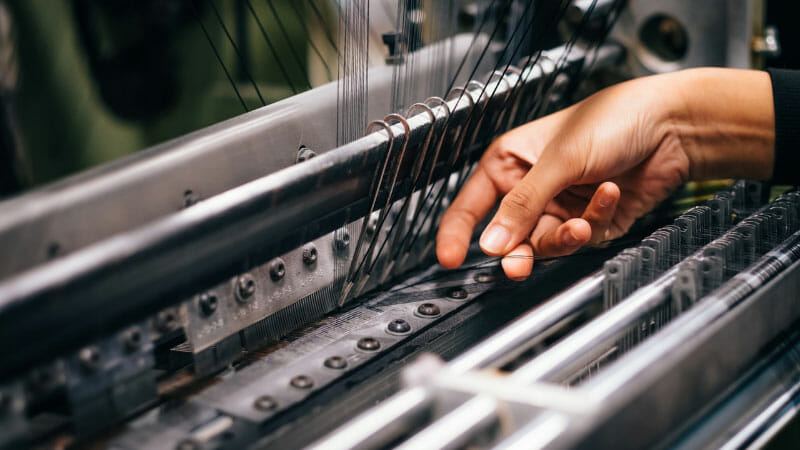
The garment industry is the most important sector of Bangladesh’s economy. In addition to the highest export earnings, the sector has been making a major contribution to the employment of millions of people for the last four decades. In the field of women’s empowerment, the garment industry is ahead of any other sector. Due to the government’s versatile facilities, cheap labor, and the hard work of entrepreneurs, Bangladesh has been able to secure the second position in the export of readymade garments.
Following the collapse of Rana Plaza in Savar, the Bangladesh garment industry suffered a major blow. However, in the last seven years, due to various initiatives, it has turned out quite well. However, amid the ongoing coronavirus epidemic, the country’s top export-earning sector is once again facing a major catastrophe. Many entrepreneurs in the sector were shocked when one purchase after another was canceled or suspended in March, as the coronavirus pandemic took a terrible turn. However, in a few days, the situation improved a bit. Exports continue to grow slowly. However, even if the situation improves temporarily, Corona will still face various challenges to survive in the garment export business in the future. It will require the initiative of entrepreneurs as well as the concerned government departments. The point is, we need to be quick to adapt to changing circumstances. In today’s report, we will discuss the challenges and challenges of the next garment sector. But before that, I will learn some basics about the garment sector. So that a complete picture of the garment sector is available.

The Beginning of the Garment Industry in Bangladesh
The garment industry in Bangladesh is one of the country’s greatest economic success stories. Today, Bangladesh is known as one of the world’s leading ready-made garment exporters. Still, the journey began with courage, vision, and a group of pioneers who had little experience but strong determination.
The early growth of Bangladesh’s garment sector was shaped by entrepreneurship, foreign collaboration, government support, and affordable labor. Over time, this industry became a major source of export earnings, employment, and industrial development for the country.
How Bangladesh’s Garment Industry Started
The story of Bangladesh’s garment industry began with Desh Garments, one of the first export-oriented ready-made garment factories in the country. After retiring from government service, Mohammad Nurul Quader established Desh Garments in Kalurghat, Chittagong.
At that time, Bangladesh had almost no experience in operating ready-made garment factories. Workers, managers, and entrepreneurs were unfamiliar with modern garment production, export procedures, quality control, and international buyer requirements.
To solve this challenge, Mohammad Nurul Quader partnered with the South Korean company Daewoo. This partnership became a turning point for the Bangladesh garment industry.
Training in South Korea: A Historic Step
To build skilled manpower, Nurul Quader sent around 130 workers and officials from Desh Garments to South Korea for professional training. These trainees learned garment production, factory management, quality standards, and export operations.
Many of these trained workers and officials later became successful garment entrepreneurs themselves. This created a strong foundation for the growth of the ready-made garment industry in Bangladesh.
Because of this contribution, Mohammad Nurul Quader is widely regarded as one of the pioneers of Bangladesh’s garment industry. His vision helped create a new industrial sector that would later transform the national economy.
Desh Garments and Its Major Contributions
Desh Garments was not only an early garment factory; it also introduced several important systems that helped the industry grow. It played a key role in promoting:
- Back-to-back LC facilities
- Bonded warehouse systems
- Export-oriented garment production
- International buyer communication
- Skilled workforce development
- Modern factory management practices
These systems later became essential for the growth of Bangladesh’s ready-made garment sector.
Expansion of Garment Factories in Bangladesh
After the success of Desh Garments, many new entrepreneurs entered the garment business. Throughout the 1980s and 1990s, garment factories began to appear across Bangladesh, especially in Dhaka, Chittagong, Gazipur, Narayanganj, and other industrial areas.
Many entrepreneurs started with small rented spaces, old houses, or limited capital. Some began as subcontractors for larger factories. Over time, many of them built large export-oriented garment companies.
This rapid expansion helped Bangladesh become one of the most competitive garment-producing countries in the world.
DBL Group: A Success Story in Bangladesh’s Garment Industry
One of the remarkable success stories in Bangladesh’s garment industry is DBL Group, formerly known as Dulal Brothers.
The company began in 1991 with a small factory at 102 Green Road in Dhaka. Four brothers — Abdul Wahed, M. A. Jabbar, M. A. Rahim, and M. A. Quader — started the business with a capital of around Tk 60 lakh provided by their father.
They converted their old house into a small garment factory and purchased 36 sewing machines. In the beginning, they subcontracted work to other factories. They produced garments for other exporters and delivered finished products on time.
For the first two years, the business did not generate significant profit. However, their commitment to product quality, timely delivery, and buyer satisfaction helped them build trust.
The First Direct Export Order
In 1993, DBL received its first direct purchase order from a UK buyer. The order was for 3,000 pieces of polo shirts. This became a major turning point for the company.
After that, the four brothers did not have to look back. Over the years, DBL Group became one of Bangladesh’s leading garment exporters.
Today, DBL Group has expanded beyond garments into several other sectors, including:
- Ceramic tiles
- Information technology
- Telecommunication
- Dredging
- Pharmaceuticals
The group now operates multiple companies and employs thousands of people. Its journey shows how small garment entrepreneurs in Bangladesh turned local businesses into internationally recognized industrial groups.
Government Support and Industry Growth
Several government facilities and policy advantages strongly supported the growth of the garment industry in Bangladesh. These included:
- Duty-free import facilities
- Cash incentives
- Back-to-back LC facilities
- Bonded warehouse facilities
- Export-friendly policies
- Access to protected international markets
These benefits encouraged many entrepreneurs to enter the garment business, even without prior experience.
At the same time, Bangladesh had a competitive advantage because of lower labor costs compared to many other countries. This made the country attractive to international buyers looking for cost-effective garment production.
Why Bangladesh Became a Global Garment Hub
Several factors helped Bangladesh become a global leader in ready-made garment exports:
1. Affordable Labor Cost
Bangladesh offered competitive production costs, which attracted buyers from Europe, the United States, and other developed markets.
2. Skilled Workforce Development
The early training programs, especially through Desh Garments and Daewoo, helped create a generation of skilled garment professionals.
3. Entrepreneurial Growth
Many local entrepreneurs entered the industry with limited capital but strong determination. Their hard work helped build the foundation of the sector.
4. Government Policy Support
Export incentives, bonded warehouse facilities, and financial systems such as back-to-back LCs helped the industry grow quickly.
5. Global Market Opportunity
During the early 1980s, countries like Sri Lanka faced political instability and civil conflict. As a result, many international buyers looked for alternative sourcing destinations. Bangladesh became a strong choice.
Current Challenges in Factory and Worker Data
Although the garment industry has grown significantly, there is still confusion about the exact number of active garment factories and workers in Bangladesh.
Organizations such as BGMEA and BKMEA represent different parts of the industry. BGMEA represents woven garment factories, while BKMEA represents knitwear manufacturers. However, not all member factories are currently active or directly involved in export.
This creates differences in reported data about:
- Total number of garment factories
- Number of active export-oriented factories
- Number of workers employed
- Number of closed or inactive factories
Accurate data is important for policy planning, worker welfare, compliance, and future industry development.
Impact of the Garment Industry on Bangladesh
The ready-made garment sector has played a major role in Bangladesh’s economic development. It has contributed to:
- Export earnings
- Employment generation
- Women’s empowerment
- Industrial growth
- Foreign investment
- Poverty reduction
- Urban economic development
Millions of workers, especially women, have found employment through this industry. The sector has also helped Bangladesh build a strong position in the global export market.

Another big advantage was given towards the end of the Ershad government. Arrangement of local debentures or back-to-back debentures (LCs). As a result, the entrepreneurs did not have to spend any money on importing raw materials. Entrepreneurs then only had to bring garment exporter orders. And the responsibility for money belongs to the bank. Yet many garment owners feel that bond-backing and back-to-back LCs play a key role in the sector’s massive growth.
In that context, the Awami League government of 1996-2001 provided another major advantage to the garment sector. The textile and garment sector was given a 25 percent cash facility in 1996. However, the BNP government reduced it to 15 percent in the 2002-03 financial year. There is still cash assistance. There are also new facilities. Opportunity: The latest example is the first incentive package (Rs 5,000 crore) announced after the launch of Corona with the garment industry in mind. Garment exporters have increased 6 times
The garment sector, which did not exist at the time of independence, now accounts for 80 percent of the country’s total export revenue. In the financial year 1983-84, the amount of garment exports was 3 crore 15 lakh dollars. In the just-concluded financial year, exports were 2,795 crore dollars. This means that exports have increased 6 times in 36 years.
As a single country, the major markets for Bangladeshi readymade garments are the United States, Germany, the United Kingdom, Spain, France, Italy, Japan, the Netherlands, Canada, Denmark, Australia, and Belgium. As an alliance, the European Union (EU) is a big destination for Bangladeshi clothing. In the 2019-20 fiscal year, the total garment exports to the EU were 1,614 crore dollars, or 61.35 percent. After that, the highest export to the United States was 514 crore dollars or 16.6 percent. The main reason for the increase in exports to the EU is that Bangladesh has had GSP access to the EU market for a long time. That is why EU buyers and brands can take products from Bangladesh to their own countries under a duty-free facility.
At one time, the main markets for Bangladeshi clothing were the EU, the United States, and Canada. However, even though it is late, the export of Bangladeshi-made garments is increasing in new or unconventional markets outside these three markets. Although it still has less to say than expected. In the last 2019-20 financial year, 18.10 percent of the total garment exporters or garments worth ?????? 480 million went to the new or obsolete market. Among the new markets, garments worth ??? 960 million were exported to Japan, 600 million to Australia, 440 million to Russia, 420 million to India, 320 million to China, and 290 million to South Korea.
Entrepreneurs in Bangladesh mostly export more than 5 types of garments. They are – shirts, trousers, jackets, t-shirts, and sweaters. In the last fiscal year 2019-20, out of 2,795 crore, 81 percent or 1,993 crore came to these five garments. Among them, shirts worth 160 million, trousers worth ??? 544 million, jackets worth 351 ?????? Garment exporters included T-shirts worth 571 million and sweaters worth 359 million.
The Tragedy of Rana Plaza: A Turning Point for Bangladesh’s Garment Industry
On April 24, 2013, the collapse of the Rana Plaza building in Dhaka, Bangladesh, marked one of the deadliest disasters in the history of the garment industry. The building housed several garment factories, and the collapse claimed over 1,100 lives and injured thousands. The event cast a spotlight on the unsafe working conditions in many of Bangladesh’s garment factories. It sparked a global outcry, leading to significant reforms in factory safety and labor rights.
Overview of the Rana Plaza Collapse
The tragedy shook the world, highlighting the extreme risks faced by workers in poorly constructed buildings. This event catalyzed change in the garment industry, leading to improvements in safety regulations and the emergence of initiatives to improve factory conditions.
Immediate Aftermath: Loss of Lives and Global Boycott
The collapse not only resulted in a high death toll but also triggered a temporary boycott of Bangladesh’s garment industry, causing a steep decline in orders. The international community demanded better working conditions, and many global buyers reconsidered their partnerships with Bangladeshi factories.
Global Efforts to Improve Factory Conditions Post-Rana Plaza
Following the collapse, several global and local initiatives emerged to address the dire safety conditions in Bangladesh’s garment sector. These efforts were pivotal in reforming the industry and restoring international confidence.
Formation of the European and North American Buyers’ Alliances
In response to the tragedy, international buyers, primarily from Europe and North America, formed alliances to fund factory renovations, improve worker safety, and ensure that future orders were only placed with factories that met certain safety standards.
National Tripartite Action Plan (NTAP) and Factory Renovation Initiatives
The Bangladeshi government, along with industry stakeholders, implemented the National Tripartite Action Plan (NTAP) to enforce safety regulations. This plan led to the renovation of hundreds of factories, improving structural integrity and working conditions.
The Rise of Eco-Friendly Factories in Bangladesh
With increasing awareness of sustainability in global trade, Bangladesh’s garment sector began to evolve, with a notable shift toward eco-friendly factory practices.
The Pioneer: Sajjadur Rahman Mridha and Bangladesh’s First Eco-Friendly Factory
Sajjadur Rahman Mridha spearheaded the movement towards eco-friendly factories, establishing the country’s first green factory in 2016. His initiative paved the way for others to follow, as more factories adopted sustainable practices.
Growth of Eco-Friendly Garment Factories
The introduction of green factories has become a symbol of Bangladesh’s commitment to environmental sustainability. These factories adhere to strict environmental standards to reduce carbon footprints, water use, and waste generation.
Eco-Friendly Certifications: What It Means for Bangladesh’s Garment Sector
As demand for sustainable fashion grows, certifications such as those from the US Green Building Council (USGBC) and LEED (Leadership in Energy and Environmental Design) have become increasingly important in Bangladesh’s garment sector.
US Green Building Council (USGBC) Certification
Bangladesh’s garment factories have increasingly sought the prestigious USGBC certification, ensuring compliance with global standards for energy efficiency and environmental responsibility.
Overview of ‘LEED’ Certification: Platinum, Gold, Silver, and Certified
LEED certification evaluates various environmental factors, from energy efficiency to sustainable building materials. Factories that achieve LEED certification gain international recognition, which in turn boosts their reputation among global buyers.
The Impact of COVID-19 on Bangladesh’s Garment Export Sector
The COVID-19 pandemic brought unforeseen challenges to the global garment industry, and Bangladesh’s garment export sector was no exception. The crisis caused a sharp decline in orders and exposed the sector’s vulnerability to global disruptions.
Initial Impact of the Pandemic on Orders and Export Rates
As countries locked down, demand for garments plummeted, leading to a massive decline in Bangladesh’s exports. Many factories were forced to halt production, and workers faced job insecurity.
Government Intervention: Loan Assistance and Wage Subsidies for Entrepreneurs
To mitigate the impact, the Bangladeshi government introduced loan assistance programs and wage subsidies for garment entrepreneurs. This support was crucial in keeping many businesses afloat during the pandemic’s most challenging periods.
Adapting to the “New Normal” in Global Fashion
The post-pandemic world brought with it new trends in fashion consumption, and Bangladesh’s garment sector had to quickly adapt to meet the evolving market’s demands.
Shift in Buyer Expectations and Purchase Patterns
Buyers now expect faster turnaround times, increased transparency in supply chains, and more sustainable products. The shift towards online shopping also required Bangladesh’s garment factories to reconfigure their operations to keep up with the growing demand for e-commerce.
Emphasis on Fast Delivery and Online Sales
Garment buyers increasingly value speed and flexibility, prompting Bangladeshi factories to streamline operations. The shift towards online sales and direct-to-consumer models is also influencing how garments are produced and delivered.
Looking Ahead: Key Challenges for Bangladesh’s Garment Sector Post-COVID
While the sector has shown resilience, several challenges remain for Bangladesh’s garment industry, especially as it recovers from the pandemic.
Dealing with Reduced Order Volumes and the Shift to Smaller Orders
The pandemic has led to a decrease in bulk orders, with buyers now preferring smaller, more frequent shipments. This shift has put pressure on factories to adjust their production schedules and supply chains.
The Importance of Product Diversification for Future Success
As competition intensifies, particularly with emerging markets like Vietnam, Bangladesh’s garment industry must diversify its product offerings to remain competitive and sustainable in the long term.
Major Buyers and Their Changing Approaches
Leading global buyers, including H&M and Marks & Spencer, have adapted to new market conditions by altering their sourcing strategies and emphasizing sustainability.
H&M’s Continued Commitment to Bangladesh
Despite global challenges, H&M has maintained its strong commitment to Bangladesh, helping the country’s garment industry remain one of the largest in the world. H&M’s focus on ethical sourcing and sustainability has influenced Bangladesh’s industry reforms.
Marks & Spencer and the Shift Towards Local Production and Fast Delivery
Marks & Spencer, one of Bangladesh’s largest buyers, has shifted its focus to sourcing from local factories to achieve faster delivery times. The company has emphasized reducing lead times, a trend that has shaped production practices in Bangladesh.
Vietnam’s Rise as a Competitor in the Global Garment Market
As Bangladesh faces new challenges, Vietnam has quickly become a rising competitor in the global garment export market, thanks to its growing capacity and trade agreements.
Comparative Growth in Exports: Bangladesh vs. Vietnam
Vietnam’s garment exports have surged in recent years, surpassing Bangladesh in some key export markets. Its advanced infrastructure, efficient supply chains, and government support have contributed to its rapid rise.
The Competitive Edge of Vietnam and Challenges for Bangladesh
Vietnam’s ability to fulfill orders quickly and cost-effectively poses a significant challenge for Bangladesh, which must find ways to remain competitive by improving production efficiency and expanding its market reach.


