
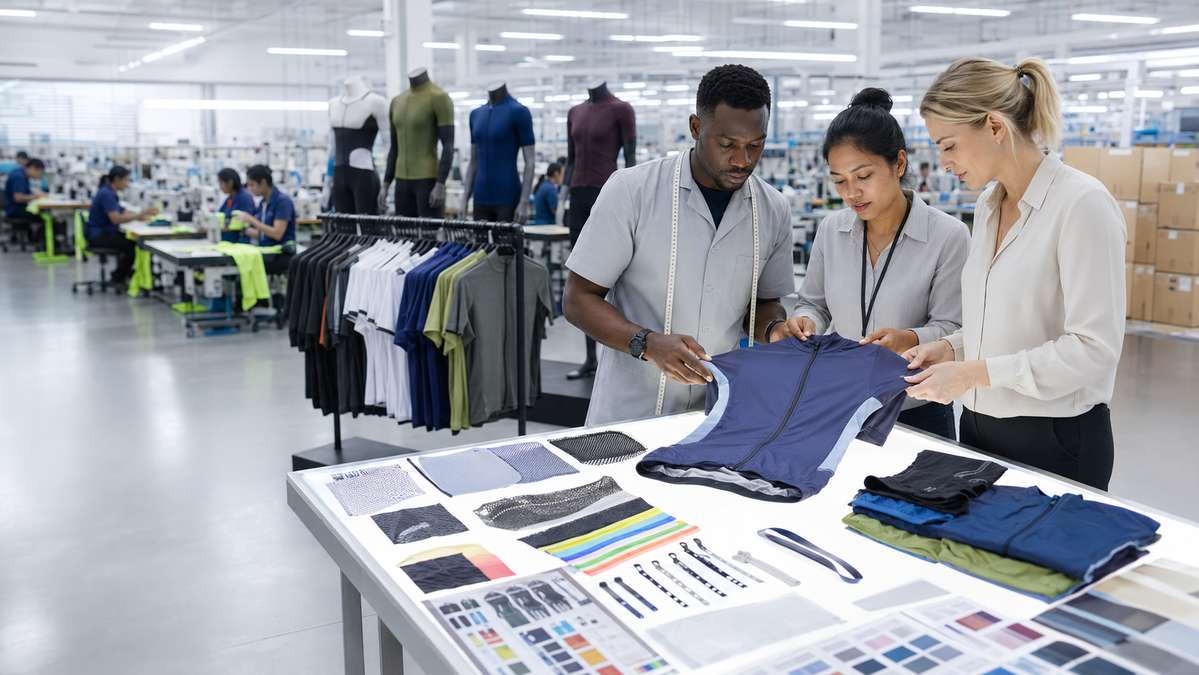
Cycling jersey manufacturers produce custom performance apparel for teams, clubs, events, retailers, and private-label brands. A reliable supplier should offer breathable fabrics, cycling-specific fits, sublimation printing, secure pockets, quality zippers, accurate sizing, sample development, bulk quality control, and dependable international delivery.
What Does a Cycling Jersey Manufacturer Actually Do?
A cycling jersey manufacturer develops and produces fitted performance tops for road cycling, mountain biking, touring, indoor riding, events, and casual club use. Depending on the project, the service may include pattern development, fabric sourcing, artwork setup, sublimation printing, cutting, sewing, labeling, inspection, packing, and export support.
The strongest suppliers account for riding posture, stretch, ventilation, pocket load, hem stability, and repeated washing.
Buyers exploring custom cycling jersey manufacturing options should first decide whether they need a technical race product, an inclusive club jersey, an event giveaway, or a retail collection. Each calls for a different balance of fit, fabric, features, and cost.
Common order types
- Private label cycling jerseys for sportswear brands
- Custom team kits with rider names and sponsor logos
- Wholesale cycling jerseys for online and physical stores
- Gran fondo, charity ride, and tour merchandise
- Corporate cycling apparel for staff or client events
- Men’s, women’s, youth, and unisex size programs
- Short-sleeve, long-sleeve, thermal, and relaxed-fit styles
- Coordinated jerseys, bib shorts, jackets, and accessories
Start With the Ride, Not the Artwork
Before discussing colors, ask where and how the jersey will be used. A light summer jersey for Doha is not the same product as a thermal training top for Toronto. A race team may value compression and low drag. A charity ride may need an easier fit that suits many body types.
A useful product brief answers five questions:
- Who will wear it?
- What climate and season is it for?
- How long and hard will people ride?
- Is it sold at retail, issued to a team, or included in an event entry?
- What price, delivery date, and quality level must the finished order meet?
An experienced custom clothing manufacturer can translate those answers into construction choices. Put every requirement in a written tech pack; “premium quality” is too vague to price or inspect.
Build a Jersey That Works on the Bike
Choose the right fit block
Cycling fit is usually described as race, performance, club, or relaxed. Names vary by supplier, so measurements matter more than labels.
- Race fit: Close to the body with more stretch and a shorter front for an aggressive riding position.
- Performance fit: Streamlined but less restrictive, suitable for trained riders and broad retail use.
- Club fit: More room at the torso and arms, often better for mixed groups and event orders.
- Relaxed fit: Easier through the body, useful for recreational cycling and lifestyle collections.
Ask for finished garment measurements, not only body measurements. Key points include half chest, waist, bottom opening, front and back length, sleeve opening, bicep, shoulder or raglan line, and collar height. State the measuring method and tolerance for each point.
Judge fit in riding posture. The back should cover the waist without bunching, while the front should not fold heavily over the stomach.
Match fabric zones to their jobs
Polyester and polyester-rich performance knits are common because they are lightweight, quick-drying, printable, and durable. Elastane may be added for stretch and recovery. Mesh panels can improve airflow, but an open structure may reduce sun coverage or become more delicate.
Instead of asking only for fabric weight in GSM, request a complete fabric specification:
- Fiber composition
- Knit structure
- GSM and acceptable tolerance
- Stretch and recovery in both directions
- Moisture-management or wicking performance
- Air permeability
- Pilling and abrasion resistance
- Colorfastness to washing and perspiration
- UV or UPF claims, if required and supported by testing
Do not assume “moisture-wicking” proves a result. Define a test method or approve a named fabric with evidence. For sustainability claims, request the exact recycled content and relevant chain-of-custody documents.
Minmax’s broader jersey manufacturing range shows that the company serves several sports categories. For a cycling order, however, make the cycling construction details explicit rather than relying on a general jersey standard.
Engineer the details riders notice
Small components often decide whether people keep wearing a jersey.
Zipper: A full-length zipper helps ventilation and dressing. A half-zip or quarter-zip may reduce cost. Specify zipper brand or performance grade, puller style, color, locking function, guard, garage, and whether it must open from the bottom.
Rear pockets: Three back pockets are common, but capacity and placement should reflect the rider and garment size. Reinforce stress points. Test the pockets with realistic loads rather than inspecting them empty.
Hem grip: Silicone gripper tape can help the jersey stay in place. Check grip, stretch, skin feel, and recovery after washing. A very firm gripper can feel secure yet uncomfortable.
Sleeves: Set-in, raglan, and bonded-looking sleeve styles create different fits and price points. Raw-cut or low-profile cuffs can look clean, but they demand reliable fabric recovery and careful finishing.
Seams: Flatlock may reduce bulk in selected areas. Overlock and coverstitch can also perform well when seam placement, thread, stretch, and artistry are controlled.
Buyers can use a specific men’s cycling jersey example as a discussion starter, then replace generic assumptions with their own approved measurements, materials, artwork, trims, and test requirements.
Treat Sublimation as a Production System
Sublimation can cover synthetic jersey panels with detailed colors, gradients, sponsor marks, and patterns without a heavy surface layer. Printing usually occurs before garment assembly.
That freedom comes with controls. The artwork must fit the pattern pieces. Logos can shift near seams. A line that flows across the front, side, and back may not align perfectly unless the tolerance is planned. Very dark designs may also show white at needle holes or when fabric is stretched.
Artwork handoff checklist
- Supply vector artwork where possible.
- Convert fonts to outlines or include approved font files.
- Provide Pantone references or physical color standards.
- Mark every sponsor logo and placement.
- Keep critical artwork away from seam allowances and zipper edges.
- Set rules for rider names and numbers.
- Confirm whether mockups are visual guides or exact placement maps.
- Approve a printed strike-off on the actual bulk fabric.
A digital proof checks spelling and layout, not printed color. Review a strike-off on bulk fabric under consistent light and retain it for inspection.
Retro-inspired collections need the same discipline. A retro cycling jersey style reference can help frame a design direction, but buyers must use original artwork or designs they are authorized to reproduce. Team badges, sponsor marks, event logos, and brand trade dress may be protected intellectual property.
The Sample Should Survive a Real Ride
Put the pre-production sample on a rider from the intended customer group and test it under realistic conditions.
A practical ride-test routine
- Check the standing fit. Review collar comfort, sleeve grip, zipper shape, and overall appearance.
- Move into riding posture. Look for front bunching, back coverage, shoulder tension, and collar pressure.
- Load the pockets. Add a phone, snacks, tools, or a light layer. Check sag, bounce, access, and seam strain.
- Ride and sweat. Assess airflow, cling, chafing, drying, and hem movement.
- Wash the sample. Follow the proposed care label several times. Recheck measurements, print, gripper, zipper, and seam appearance.
- Record changes. Mark every revision on the tech pack and request a new approval sample when changes affect fit or performance.
Long-sleeve products need extra checks at the elbow, forearm, cuff, and sleeve length. Use a long-sleeve cycling jersey reference to begin, but specify whether it is a sun layer, a cool-weather jersey, or an insulated winter piece.
Control Bulk Quality With Measurable Standards
Quality control works best when both buyer and factory know what passes before production starts. Create an approval pack that contains the signed sample, measurement chart, graded nest, bill of materials, color standards, print strike-offs, artwork files, label details, packing instructions, and defect criteria.
Inspection should cover more than appearance.
| Control point | What to verify |
|---|---|
| Fabric | Composition, weight, shade, stretch, recovery, defects |
| Color, sharpness, stains, panel placement, logo accuracy | |
| Measurements | Critical points within agreed tolerances |
| Construction | Seam strength, stitch quality, symmetry, reinforcement |
| Components | Zipper function, gripper performance, label accuracy |
| Performance | Pocket load, dimensional stability, colorfastness |
| Packing | Size ratio, barcode, carton marks, quantity, assortment |
Minmax Textile describes in-house sample development, technical and quality teams, third-party testing, internal checks, and pre-final inspection at AQL 2.5 on its company profile. Buyers should still state the inspection level, sample size, defect classes, laboratory tests, and who pays for reinspection in the purchase agreement.
Define defects before the inspector arrives
A missing label, broken zipper, open seam, wrong sponsor mark, or severe shade change may be a major or critical issue depending on the order. A minor loose thread is different. Agree on these categories early. Otherwise, the supplier and buyer may interpret the same fault in opposite ways.
Plan a Size Range People Can Trust
International size labels are not universal, and cycling fits range from close racewear to relaxed touring apparel.
Build the chart from customer data and intended fit. Review at least one small, one medium, and one large graded size; broad programs merit a full-size set. Use purpose-built women’s and youth blocks when needed.
Show useful body guidance and garment measurements on the product page. Explain the fit in plain language to reduce returns and event-day mistakes.
Local Market Notes for Ten Buying Regions
The assortment and commercial plan should reflect where the jersey will be sold.
USA and Canada
The USA supports team, event, corporate, and direct-to-consumer programs across very different climates. Consider regional capsules rather than one fabric for every state. Canada may need summer jerseys plus long-sleeve or thermal layers for shoulder seasons. Use clear North American size guidance, bilingual packaging where your Canadian channel requires it, and confirm importer, fiber-labeling, and care-label responsibilities.
UK, Germany, and the Netherlands
Changeable weather favors layering, packable protection, and long-sleeve options in the UK. Germany’s technical consumers may expect precise product specifications and credible support for material or performance claims. The Netherlands has a deep everyday cycling culture as well as sport riders, which can support practical club fits and commuter-led designs alongside race products. For EU sales, align labeling, product-safety, chemical, packaging, and importer obligations with current rules before shipment.
Australia and South Africa
Heat, strong sun, and long outdoor seasons can make light fabrics, airflow, and verified UV protection important. Do not state a UPF value without evidence. Australia’s reversed seasons also affect production calendars; order dates built around the Northern Hemisphere may miss the local spring launch. In South Africa, consider both warm-region jerseys and cooler early-morning riding conditions, as well as shipping routes and landed-cost volatility.
UAE, Saudi Arabia, and Qatar
Hot-weather comfort is central. Buyers often prioritize light colors, ventilation zones, sweat management, and modesty-aware fit choices for selected groups. Night rides and organized events may benefit from reflective details, though reflectivity should be tested rather than assumed. Confirm Arabic or bilingual label needs, local conformity and importer requirements, and delivery buffers around major holidays and event dates.
These notes are not legal advice. Confirm current product, labeling, consumer, tax, and customs rules with a qualified adviser, importer, or testing body.
MOQ, Price, and Lead Time: Read the Quote Properly
There is no honest universal price for a custom cycling jersey. Cost changes with fabric, print coverage, zipper grade, gripper, pocket design, seam construction, labels, packaging, quantity, size mix, testing, and shipping terms.
MOQ may apply per style, color, print, or fabric. Lower runs may cost more because setup and development are spread across fewer pieces.
Minmax’s company page publishes a general benchmark of 2,000 pieces per color and style, while also describing manufacturing across varied volumes. Treat any website figure as context only. The written, order-specific quotation should control your project.
Ask the quote to separate:
- Sample and development fees
- Unit price and quantity break
- Included fabric, trims, labels, and packaging
- Testing and inspection charges
- Tooling or artwork setup
- Freight and insurance
- Incoterm and named place
- Payment terms
- Sample, production, and transit schedule
- Validity period and currency
Lead time should begin from a named trigger, such as final sample approval, deposit receipt, artwork approval, or bulk fabric approval. “Eight weeks” is not useful if no one agrees when the clock starts.
A Seven-Question Factory Shortlist
Send the same questions to each cycling jersey manufacturer so you can compare like with like.
- Can you develop the fit and construction in our tech pack?
- Which fabrics do you recommend for our climate and price point, and what test data is available?
- Can you print a strike-off and make a functional pre-production sample?
- How do you control shade, panel matching, measurements, zippers, grippers, and pocket strength?
- What is the exact MOQ definition for this design and size range?
- Which production milestones and inspections will be reported to us?
- What export documents, packing support, and delivery terms are included?
Also request recent audit reports or certifications that matter to your program. Check scope, issuing body, facility name, and validity rather than accepting a logo on a presentation. If possible, use a factory visit or independent audit.
Turn One Order Into a Repeatable Program
Keep a controlled master file for every approved fabric, trim, measurement, label, artwork version, color standard, and packaging item. Assign version numbers. Record bulk inspection findings and customer feedback. If riders report tight cuffs or weak pockets, feed that evidence into the next development round.
For local search and buyer trust, wholesalers and distributors can support the collection with complete product pages, accurate location and contact details, real photos, size guides, delivery information, and verified customer reviews. Keep the company name, address, and phone consistent on the Google Business Profile and reputable local directories. Never buy reviews; a smaller number of specific, authentic reviews is more useful than generic praise.
Frequently Asked Questions
What should I send to a cycling jersey manufacturer for a quote?
Send the style, quantity, size range, fit, fabric target, artwork, zipper and pocket details, labels, packaging, destination, testing needs, target delivery date, and Incoterm. A complete tech pack produces a more reliable quote.
Is sublimation the best print method for custom cycling jerseys?
It is often ideal for polyester performance jerseys with detailed, all-over graphics. It keeps the surface light and breathable. Screen print, heat transfer, or embroidery may suit limited details, but each method should be tested for stretch, weight, and durability.
How do I choose between race fit and club fit?
Choose race fit for experienced riders who want a close aerodynamic shape. Choose club fit for mixed groups, events, and broader comfort. Approve actual garment measurements and conduct a riding-position fit test before bulk production.
What is the minimum order for custom cycling jerseys?
MOQ depends on fabric, print, trims, design count, and factory setup. Ask whether the stated minimum applies per style, per color, per artwork, or to the total order. For Minmax Textile, request a current project-specific quotation rather than relying on a general website benchmark.
How long does bulk cycling jersey production take?
Timing depends on development, fabric availability, print approval, quantity, testing, and shipping. Build separate time allowances for quotation, samples, revisions, bulk materials, production, inspection, freight, and customs. Confirm the date trigger in writing.
Make the First Conversation Count
Reliable cycling jersey manufacturers combine apparel production with an understanding of real riding conditions. The safest sourcing decision comes from a precise brief, tested fabric, approved artwork, a ride-ready sample, measurable inspection rules, and a realistic delivery plan.
Minmax Textile presents itself as a Bangladesh-based producer for custom and wholesale cycling programs. To assess whether its capabilities fit your brand, club, event, or retail order, contact the Minmax Textile team with your tech pack, quantities, destination market, testing needs, and required delivery date. Ask for an itemized quotation and approve the complete product—not just the design—before moving into bulk.


