
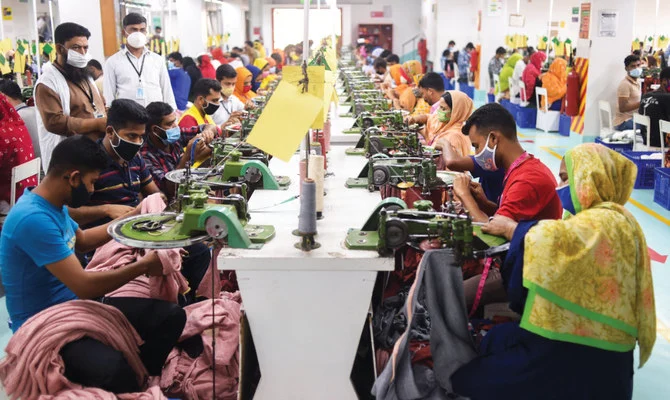
The growth of Bangladesh garment exports in U.S. market reached a historic milestone as annual shipments climbed to $8.20 billion, capturing over 10% of total U.S. apparel imports. Driven by U.S. retail diversification away from China and a rapid surge in sustainable, green manufacturing facilities, Bangladesh has solidified its position as America’s premier sourcing destination for ready-made garments.
Why U.S. Apparel Brands Are Shifting East
Walk down any major retail strip in the United States—from Fifth Avenue in New York to local shopping malls in Ohio—and flip over the tag of a premium hoodie, a pair of rugged denim, or everyday athleisure. More often than not, you will see a familiar inscription: Made in Bangladesh.
For decades, global fashion conglomerates relied heavily on a single, dominant Eastern superpower for their manufacturing needs. However, the modern retail landscape demands resilience, cost efficiency, and strict environmental compliance. Supply chain disruptions, escalating trade wars, and volatile tariff shifts have forced American procurement officers to ask a difficult question: How do we de-risk our inventory without destroying our margins?
The answer has triggered a massive macroeconomic migration. The growth of Bangladesh garment exports in U.S. market is no longer a slow trend; it is a major market realignment. Apparel brands across the USA, UK, Canada, and Western Europe are rewiring their supply chains to favor Bangladeshi manufacturing centers.
As a trusted global apparel sourcing partner, Minmax Textile has witnessed this transformation firsthand. Let’s break down the exact data, structural catalysts, and real-world implications driving this historic manufacturing shift.
By the Numbers: Tracking the Massive Export Surge
To truly appreciate the scale of this shift, we need to look closely at the latest data provided by the U.S. Office of Textiles and Apparel (OTEXA).
While the broader global retail market faced compressed consumer spending and macroeconomic headwinds, Bangladesh consistently outperformed its closest regional competitors. In the full tracking year, U.S. apparel imports from Bangladesh surged to $8.20 billion, achieving an impressive double-digit growth rate of 11.71% year-on-year.
This momentum carried straight into early calendar periods, where a historic milestone occurred: Bangladesh officially overtook China to become the second-largest apparel exporter to the United States, trailing only Vietnam
The comparative data illustrate a clear pattern of market substitution:
| Exporting Country | Market Position in U.S. Apparel Imports | Key Growth Drivers & Dynamics |
| Vietnam | #1 Destination | High specialization in synthetic fibers and technical activewear. |
| Bangladesh | #2 Destination | Dominance in cotton essentials, denim, value-added knits, and green factory infrastructure. |
| China | #3 Destination | Structural decoupling and steep volume contractions due to multi-tiered tariff surcharges. |
| India | #4 Destination | Moderate growth concentrated heavily in specialized design work and embellished apparel. |

This reallocation of market share proves that American buyers are actively swapping out legacy suppliers in favor of Bangladesh’s unparalleled capacity and competitive pricing structures.
The Catalysts: What is Driving the U.S. Market Shift?
The massive growth of Bangladesh garment exports in U.S. market is not an accidental spike. It is the result of long-term planning, massive industrial upgrades, and changing geopolitical realities.
1. Structural Decoupling from Legacy Supply Hubs
American apparel brands are highly sensitive to geopolitical exposure. Ongoing trade tensions, fluctuating Section 301 tariffs, and policy instability have made relying heavily on Chinese manufacturing a major business risk. When a single policy shift can instantly add a 25% or greater cost burden to an incoming shipment, diversification becomes an act of corporate survival. Bangladesh has emerged as the most stable, high-volume alternative capable of absorbing large-scale orders without breaking a brand’s financial baseline.
2. Unmatched Green Industrial Infrastructure
Modern consumers—particularly Gen Z and Millennials in the USA and Canada—demand ethical transparency. Brands can no longer hide behind opaque supply chains.
Bangladesh responded to this consumer demand by building the safest, most environmentally compliant textile infrastructure in the world. The country boasts the highest concentration of LEED-certified (Leadership in Energy and Environmental Design) garment factories globally. By operating facilities that utilize up to 50% less water and energy than traditional plants, manufacturers allow international brands to meet their corporate ESG (Environmental, Social, and Governance) targets natively.
3. Vertical Integration and Price Resilience
A common historical criticism of alternative sourcing hubs was their reliance on imported raw materials, which extended lead times. Bangladesh solved this by investing heavily in domestic spinning mills, fabric processing plants, and trim manufacturing. This vertical integration allows operators like Minmax Textile to handle the entire lifecycle of a garment—from raw yarn spinning to final retail packaging—minimizing shipping delays and neutralizing global logistics shocks.
Practical Blueprint: Seamless Sourcing from Bangladesh
For mid-sized to large fashion brands in the USA, UK, and Europe, transitioning production lines to a new country can feel daunting. Mismanaging a transition can lead to missed seasonal product drops, inconsistent sizing, or unexpected custom delays.
To achieve a seamless transition and leverage this regional growth safely, procurement teams should follow a structured optimization pathway:
Global Market Variations: USA vs. UK, Canada, and Europe
While the United States remains the single largest destination for these goods, the underlying drivers vary across Western economies:
-
United States: Sourcing shifts are primarily policy-driven, catalyzed by aggressive diversification away from China, tariff mitigations, and high-volume demand for denim and knit essentials.
-
United Kingdom: Buyers prioritize rapid turnaround times and agile fashion cycles to restock high-street retail brands efficiently.
-
Canada: Sourcing decisions are deeply influenced by duty-free trade provisions for developing countries, creating highly predictable, low-tariff import environments.
-
Germany & France: The focus here is almost entirely on strict environmental compliance, organic textile verification (GOTS), and circular supply chains.
Frequently Asked Questions (FAQ)
Why are U.S. apparel brands moving production to Bangladesh?
U.S. brands are diversifying to mitigate geopolitical risks, avoid volatile tariff penalties associated with traditional manufacturing hubs, and leverage Bangladesh’s massive network of highly sustainable, LEED-certified green factories.
What types of garments dominate Bangladesh’s export market?
While historically famous for high-volume cotton basic t-shirts and trousers, Bangladesh has successfully shifted into value-added segments including premium denim, technical outerwear, specialized activewear, and intricate knitwear garments.
How does Minmax Textile ensure quality control for international shipments?
Minmax Textile employs an end-to-end quality assurance framework, conducting multi-stage inspections from raw yarn testing to inline stitching assessments and final pre-shipment audits, guaranteeing total adherence to international retail standards.
How long is the standard shipping lead time from Bangladesh to the USA?
Ocean freight from the Port of Chittagong to major U.S. ports typically ranges between 30 to 45 days, depending on whether shipments are routed to the West Coast or East Coast distribution hubs.
Conclusion: Securing Your Supply Chain for the Future
The numbers speak for themselves. The ongoing growth of Bangladesh garment exports in U.S. market is not a temporary phase—it represents a permanent structural realignment of global apparel production. For retail brands aiming to stay competitive over the next decade, building an asset-light, highly resilient production base in Bangladesh is no longer optional.
Success in this shifting market requires more than just picking a factory out of a directory. It demands a dedicated, boots-on-the-ground manufacturing partner who understands international compliance, premium quality control, and streamlined logistics.
Whether you are an established fashion house looking to improve your margins or a growing brand trying to scale your inventory safely, Minmax Textile provides the manufacturing infrastructure, vertical supply chain access, and execution expertise needed to transform global sourcing challenges into distinct competitive advantages. Let’s build a more resilient, sustainable garment supply chain together.


